

Overland Flow Path Design NSW: What Your Engineer Needs to Get Right
Overland flow path design NSW is not something most people think about. But when there is a big storm, you can see where the water goes if the pipes can’t hold it all. Every home has these flow paths. This is the way water moves over the ground when it rains a lot. Engineers look at and plan these paths for each development space. If this is not done right, water will end up in the wrong place. It can get inside buildings, go to a neighbor’s land, or gather in spots that cause problems.
At R I Eng Pty Ltd, we look at and design overland flow paths for new homes in NSW. This work covers houses, townhouses, duplexes, homes joined together, and granny flats.

What Is an Overland Flow Path and Why Does It Exist?
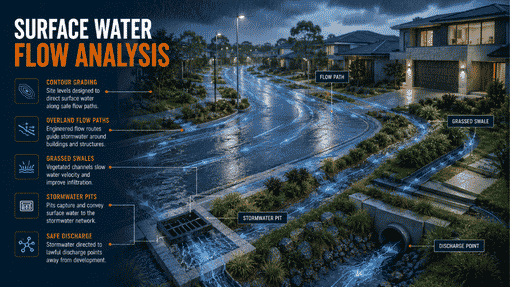
When rain comes down faster than the ground can take in, water runs over the surface. It goes along the way the land slopes. This is called overland flow. The way the water moves is called the overland flow path.
On an empty piece of land, the flow of water is easy to see. But on land with buildings, fences, driveways, and walls, the water path will be different. New buildings can change where water goes. A fence might stop water from going where it used to. A higher floor can send water toward other houses. Civil engineers look at all of these things. They plan the site to keep water moving in a safe way for everyone.
The 1-in-100-year storm is what most NSW councils use when they plan. Your stormwater pipes can handle smaller storms that happen more often. The overland flow path takes care of water when it is more than what the pipes can handle. This is for big storms that put a lot of stress on the pipes and other water systems.
How R I Eng Pty Ltd Designs Overland Flow Paths
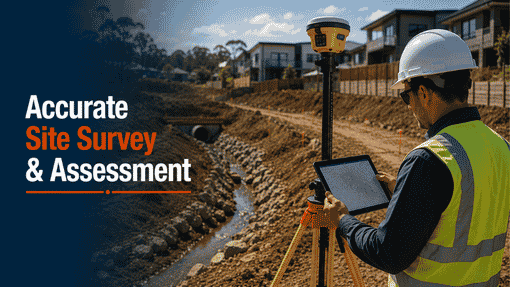
We begin with your site survey and the topographic data. After that, we see how water goes over the site during a big storm. We find out where water comes in, where it goes, and where it leaves.
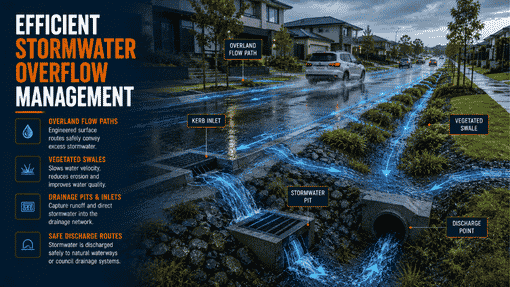
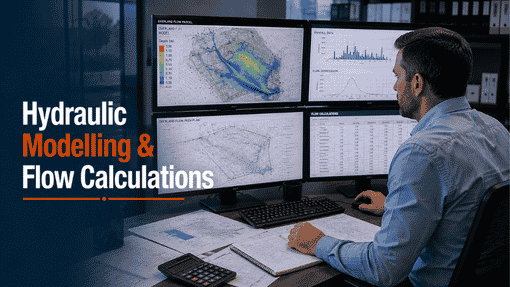
Then we add the overflow route into the plan. This means picking surface slopes, overflow channels, edge features, and places where water goes. Every part helps move water away from homes people live in. We make sure the water flow calculation for NSW uses the right rain data and catchment details for your area.
The final design shows where the main flood path in NSW flows. Your builder follows these grades closely. Water moves just the way the engineer planned for it to go.
Which Projects Need Overland Flow Path Design?
Most houses and buildings in NSW need this type of work. Here are the projects we do the most:
Houses and knockdown rebuilds change the way water moves across the block. We look again at the full path of water flow.
Duplexes and attached dwellings — because there are shared walls, it can be harder to manage where rainwater goes in overland flow path civil NSW design. Water that comes from one home should not make things worse for the one next door.
Granny flats — when you add a second building, it takes up more space and changes how water moves on the ground. We look at the main house and the granny flat together in one plan.
Townhouses — these are homes that share walls. They are built next to each other, so they also share where water flows. The overflow route design NSW must plan how water moves for the whole area.
What Happens If the Flow Path Is Not Designed?
Water always finds a way to move. If there is no proper overflow way in the design, water can run through a building, flow into a neighbor’s yard, or press up against a wall until it breaks. This can lead to damage, fights with insurance, and complaints to the local council. Fixing this during the design stage costs much less than fixing it after the building is done.
5 Quick Questions About Overland Flow Path Design NSW
Q: Does every residential development in NSW need an overland flow path design?
Most homes do. When you build or make changes that shift how much land you cover, raise or lower the ground, or change where water goes, you change overland flow. R I Eng Pty Ltd can check what is needed for your lot and what rules go with your council area.
Q: What storm event does overland flow path design target in NSW?
Most councils in NSW plan for the 1-in-100-year storm when they design overland flow paths. The pipes are made to manage the smaller storms. The overland path helps to take care of any extra water not handled by the pipes during big storms.
Q: Can a fence or boundary wall affect the overland flow path?
Yes. A solid fence can block or change the way water moves. We include all boundary walls and fences in the overland flow check in NSW. We design around these to make sure water moves the right way.
Q: Does overland flow path design apply to granny flats?
Yes. Granny flats mean there is less land where water can soak in. They change how water moves around. We put both the main house and the granny flat together in the same civil plan.
Q: How does R I Eng Pty Ltd deliver the overland flow path design?
We give you the overland flow path plan as part of your stormwater and civil work. The final drawings show surface slopes, extra channels, and spots where water flows out. These are all set for your builder to use.
Talk to R I Eng Pty Ltd About Your NSW Project
R I Eng Pty Ltd works on overland flow path design. This is part of their civil and stormwater engineering services in NSW.
📞 Call us: +61 0451 452 932
💬 WhatsApp Us: Chat on WhatsApp
📧 Email: riengineering2155@gmail.com
🌐 Visit: riengineering.com.au
Tell us where your site is and what the project is about. We will look at what you need for development and get started fast.