

Erosion and Sedimentation Control Sydney: The Real Story Behind ESCPs
Erosion and sedimentation control in Sydney is one of those requirements that builders and developers treat as a formality — until they get a stop-work order. Then it becomes very real, very fast. Sydney councils and the NSW EPA are not lenient about sediment leaving construction sites. Mud in the stormwater drain, soil washing onto the footpath, dirty runoff reaching a nearby waterway — all of these attract fines and enforcement action that cost far more than getting the plan right from the start.
At R I Eng Pty Ltd, we design erosion and sediment control plans for construction sites across Greater Sydney. Our focus is practical civil design — not paperwork for its own sake, but measures that actually work on site and hold up under council inspection.
What Is Erosion and Sedimentation Control Sydney — And What Does an ESCP Cover?
An ESCP — Erosion and Sediment Control Plan — is a civil engineering document. It shows how a construction site will stop soil, sediment, and construction debris from leaving the site boundary during the build. Rain hits disturbed earth. That earth moves. Without the right controls in place, it ends up in the stormwater system, on the footpath, or in a nearby waterway. An ESCP maps out exactly how to stop that from happening.
A site-specific erosion and sedimentation control Sydney plan from R I Eng typically covers:
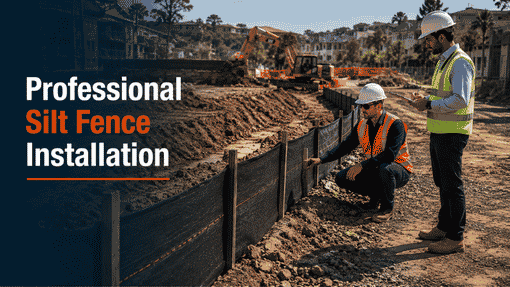
- Sediment fencing along the downslope boundary — the first line of defence against sediment leaving the site
- Stabilised site entrance — a rock pad that knocks mud off truck tyres before they hit the public road
- Rock check dams in surface drainage paths to slow water velocity and drop sediment before it exits
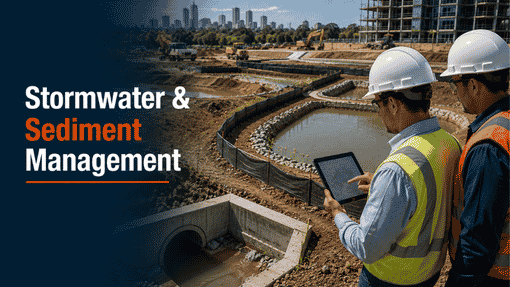
- Sediment basins on larger sites where runoff volumes are too high for fencing alone
- Topsoil stockpile management — location and covering requirements to stop loose soil from becoming a sediment source
- Construction sequence notes — which controls go in first, and how the site transitions between stages
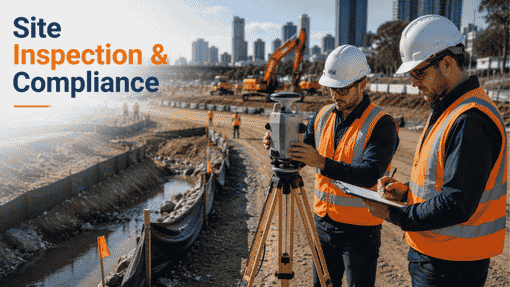
- Inspection and maintenance schedule — what gets checked after every rain event, and how damaged controls get repaired
That last item matters more than most people think. An ESCP is not a one-time document. Site conditions change as the build progresses. The plan needs to reflect what is actually happening on the ground.
Why Sydney Councils and the EPA Take This Seriously
The NSW EPA’s primary technical guide for erosion and sedimentation control is the Managing Urban Stormwater — Soils and Construction manual. Most people in the industry call it the Blue Book. It sets the design standards for ESCPs across NSW. Sydney councils apply these standards, often with their own additional requirements on top.
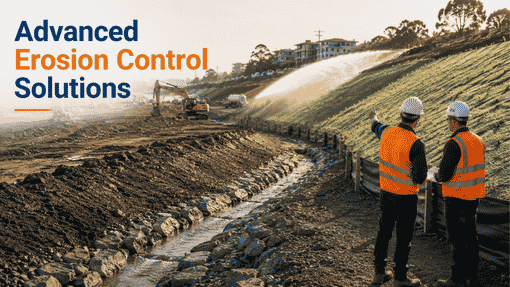
Construction sites that ignore sediment control do real damage. Sediment blocks stormwater pits. It smothers vegetation in nearby reserves. It carries nutrients and pollutants into waterways. The cumulative impact of hundreds of construction sites across Sydney — each one treating erosion control as optional — is significant.
Council inspectors know what to look for. A site without functioning controls, or with controls that do not match the submitted ESCP, can face an on-the-spot fine or a stop-work order. Neither outcome is good when you have a construction program to meet.
How R I Eng Designs Erosion and Sedimentation Control Plans in Sydney
We start with your site plan, topographic survey, and construction sequence. From there, we identify the drainage flow paths across the site, the likely sediment sources, and the discharge points where runoff could exit the boundary. We then select and position control measures based on what will actually work for that specific site — not a generic layout copied from a previous project.
Every erosion and sedimentation control Sydney plan R I Eng prepares includes:
A site plan drawn to scale showing the location of every control measure. Clear specifications for each measure — type, dimensions, materials, and installation method. A staged construction sequence showing when each control goes in relative to the build program. Post-rain inspection requirements and maintenance notes, the site supervisor can act on directly.
The result is a document your builder can follow without calling us to interpret it. That is the standard we aim for on every ESCP we produce.
Which Sydney Construction Sites Need an ESCP?
Most do — and the threshold is lower than many people expect.
Any Sydney construction project involving significant earthworks, site clearing, or soil disturbance will typically need an ESCP as part of the construction documentation. This covers new residential builds, knockdown-rebuilds, major extensions, duplexes, townhouse developments, and commercial construction.
The specific trigger varies by council, but the general rule is this: if you are moving earth, you need a plan for where it goes. Your certifier or council will confirm whether an ESCP is required for your project. If you are unsure, ask R I Eng Pty Ltd — we can confirm quickly based on your project scope and location.
Sydney Builders and Developers Ask Us About ESCPs
Q: Does a single house built in Sydney need an erosion and sedimentation control plan?
Yes, in most cases. Any residential construction involving site clearing or earthworks across Greater Sydney will need an ESCP as part of the construction documentation. The threshold varies slightly between councils — some require it for all new builds, others apply it above a specific disturbed area. R I Eng will confirm the requirement for your specific project and council area.
Q: What happens if a Sydney construction site does not have functioning sediment controls?
Council inspectors can issue a penalty infringement notice on the spot. In more serious cases — particularly where sediment has already left the site and entered a waterway — the NSW EPA can issue much larger fines and directions to remediate. Stop-work orders are also possible. Getting an ESCP prepared before breaking ground costs a fraction of any of those outcomes.
Q: How often does an ESCP need updating during construction?
Review the plan whenever site conditions change significantly. Stage transitions — from excavation to slab, from frame to lock-up — often change which controls are relevant. After heavy rain events, inspect all measures and repair any that have been damaged or displaced. The controls on site must match the current ESCP at all times.
Q: Can R I Eng prepare the ESCP at the same time as the stormwater drainage plan?
Yes — and this is often the most efficient approach. The two documents share site survey data and complement each other. Preparing them together saves time and ensures they are consistent. R I Eng regularly delivers both as a coordinated civil design package.
Work With R I Eng Pty Ltd on Your Sydney ESCP
R I Eng Pty Ltd provides civil engineering design services for construction sites across Greater Sydney. Our erosion and sedimentation control Sydney plans are practical, site-specific, and designed to hold up under council inspection — not just satisfy a documentation requirement.
📞 Call R I Eng: +61 0451 452 932
📧 Email: riengineering2155@gmail.com
🌐 Website: riengineering.com.au
Tell us your site location, project type, and timeline. We will get your ESCP sorted quickly so your build can start on schedule.