Subsoil Drainage Design NSW: Fix Waterlogged Sites for Good
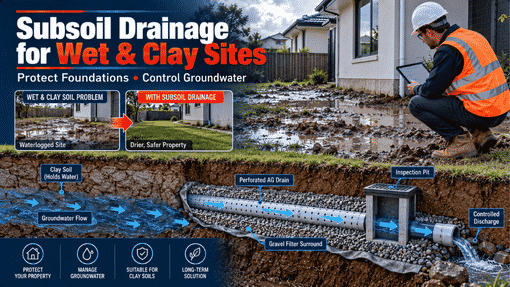
Subsoil Drainage Design NSW is the work that helps with one of the most annoying things a property owner will deal with — a wet yard that stays damp even after rain stops. Wet grass, damp soil next to the house, and muddy paths that do not dry out. These are not small or just surface-level problems. If there is no good drainage system under the ground, these things can lead to real damage to the building over time.
At R I Eng Pty Ltd, we create subsoil water systems for houses, townhouses, duplexes, attached homes, and granny flats in NSW. Here is what we do and why doing the work right is so important.
What Is Subsoil Drainage and Why Does Your NSW Property Need It?
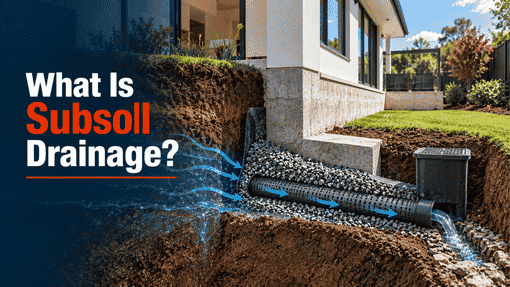
Subsoil drainage design in NSW is under the surface. It catches water before it makes the area near your home too wet. It does not move water from roofs and paved spots like surface drainage does. Instead, subsoil drainage takes care of water that is in the soil and comes from the side as well.
NSW has many types of soil. Clay-heavy soil in western Sydney holds water for many days. Sand near the coast drains fast. This can push water toward building foundations. If a drain engineer does not check the site well, any answer will not be reliable.
A well-made subsoil drainage system stops water at the right level. It moves the water in the right direction and makes sure it goes out through a legal outlet. This way, it will not put the water problem onto someone else’s property.
How R I Eng Designs Subsoil Drainage Systems in NSW
Each subsoil drainage plan begins with knowing the site. We first check your survey data, the soil, and what water paths are already there before we tell you what is needed.
From there, the civil design covers:
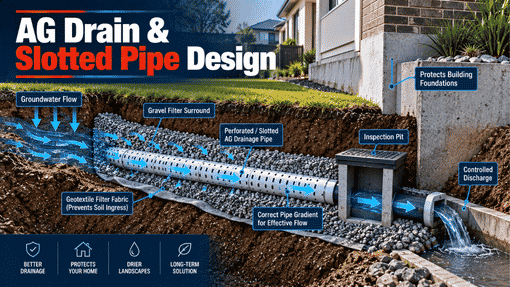
AG drain and slotted pipe placement — this is about where you put perforated or slotted pipes and how deep they go. These pipes pick up water that moves under the ground in the soil. The way the subsoil pipe is made and the slope are both very important. A pipe that is too flat will not pull water away. A pipe that is too steep can wear away soil at the end.
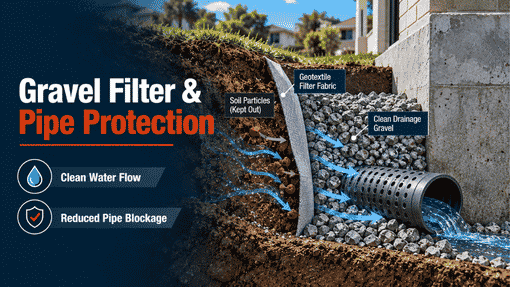
Pipe gravel specification — this is the small stones or broken rock that you find around the pipe. It lets water move in without a problem, but keeps small bits of soil out. Many people skip using the cloth filter, but this is a mistake. The pipes often get blocked in a few years if you do not use it.
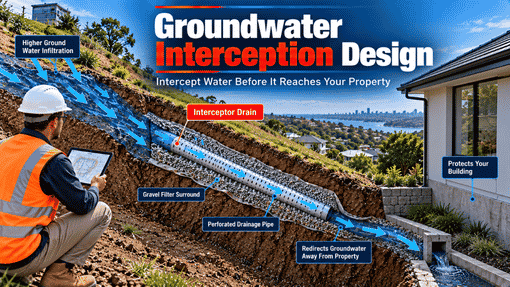
Groundwater interception design — for sites where the groundwater goes up in some seasons or after lots of rain, we put interceptor drains up the slope. These drains catch water before it can reach the building area.
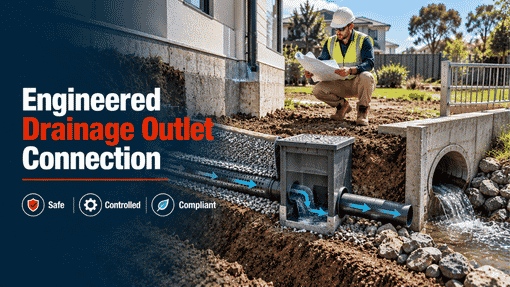
Connection to a legal spot for water to go — water under the ground needs to flow somewhere. We design the connection to the council stormwater system, a soakage trench, or another approved outlet. This depends on your site and what your council says you need.
This is simple civil work that deals with water moving away. It is not hard to talk about, but you need to do it right. That is how it will work well for many years at your place.
Which NSW Properties Benefit Most from Subsoil Drainage Design?
Clay site water management is a common job we do. There are clay soils in Blacktown, Parramatta, Penrith, and the Hills Shire. These soils hold water for a long time after it rains. Homes on this land feel the effect, such as single houses, duplexes, granny flats, and townhouses. These homes can get wet spots that do not go away fast. The wet areas can be by the lower floor slab, in the space under the floors, or near the retaining walls.
Older homes on sloping land often have this problem. Water moves down the hill through the soil. It gathers by the walls and under the house at the lowest spot. A French drain put in the right place can stop the water before it gets to the house. Sometimes, several AG drains used together work well for this too.
Granny flat additions are also seen a lot. When you put up a building at the back of your house, it can block the way water moves. This can make a wet spot in your yard that was not there before.
5 Questions NSW Property Owners Ask About Subsoil Drainage
Q: How do I know if I need a subsoil drainage system rather than a surface drain?
If water sits on top after rain, you might need only a surface drain. If the area stays wet for days after rain ends, or you notice damp near the bottom of your walls, you may need subsurface drainage. A wet site drainage engineer can tell you which system fits your site.
Q: Can subsoil drainage be installed without digging up the entire yard?
Most of the time, yes. A drain can go along the edge of your property or across the uphill side of where there is a problem. This can fix most home issues without having to dig up all of your yard. The design will show where to dig. It’s not the other way around.
Q: What soil types need subsoil drainage most urgently?
The most urgent need for subsoil drainage is in clay soil. These soil types do not let water pass through easily. Water often stays near the top of clay soil. This leads to wet conditions that last a long time. Sandy soil lets water pass through much faster. But on a slope, even sandy soil can push water sideways toward buildings.
Q: How quickly can R I Eng deliver a subsoil, water run-off plan for a NSW property?
For most homes – this includes houses, duplexes, townhouses, and granny flats – we give you designs in two to three business days after we get your survey data and all the site details.
Struggling with a wet or subsoil drainage design in NSW?
R I Eng Pty Ltd makes subsoil drainage systems for homes and big projects all over NSW. It does not matter if you have one house in Penrith, two homes together in Parramatta, or you want to add a granny flat in the Hills Shire. We give you civil drainage designs that work well.
📞 Call us: +61 0451 452 932
💬 WhatsApp Us: Chat on WhatsApp
📧 Email: riengineering2155@gmail.com
🌐 Visit: riengineering.com.au